Whether capital mobilisation improves will define the next decade for Africa


The next decade will not be defined by whether capital exists in Africa, but rather by whether that capital is put to work, said World Bank Group member International Finance Corporation (IFC) Southern Africa regional director Cláudia Conceição on Wednesday.
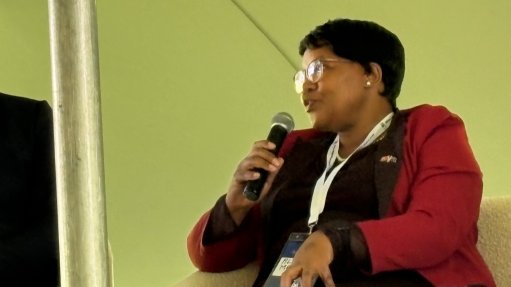
Speaking during an IFC and Jeune Afrique-hosted media engagement ahead of the Africa Financial Industry Summit (AFIS), taking place in Luanda, Angola, on November 3 to 4, 2026, she said that this would not only finance projects, but businesses, jobs, innovation and, by extension, Africa’s future.
Conceição was joined by Banking Association of South Africa MD Bongi Kunene, IFC Southern Africa principal investment officer Defne Akarcali and Jeune Afrique Media Group AFIS MD Adrian Fielding for the pre-event discussions.
Africa was not short of ambition, talent or opportunity, and with upwards of $3-trillion of African capital invested outside of the continent, conversations should focus on what was required to really mobilise this capital to invest in projects in the continent, continued Conceição.
“There are funds in Africa. There is capital. There is African capital, and the bulk of this capital is being invested elsewhere. So what can we do to really make sure that this capital benefits projects and entrepreneurs in the continent? How do we build a financial system that is capable of financing Africa's next decade of growth? These conversations are happening but these things take time.”
This is one of the conversations at the heart of the upcoming AFIS 2026, which will convene financial institutions, investors, regulators, policymakers and business leaders, besides others.
“AFIS is not just simply another industry gateway. It is where African financial priorities are translated into partnerships, investment and action, and this year’s theme is making capital count, unlocking growth through African finance. It is really relevant across Africa and especially important in Southern Africa,” she added.
The summit, which is being hosted in the Southern African region for the first time, will focus on strengthening financial institutions, deepening capital markets and supporting small businesses, as well as facilitating regional trade and financing infrastructure and energy transition.
“These are not abstract discussions. These are boardroom priorities. These are regulatory priorities, and they are competitiveness priorities.”
For banks, this means extending more affordable, long-term financing while remaining resilient. For pension funds and institutional investors, it means connecting African savings with productive African assets, and for fintechs, it means taking innovation to scale while strengthening inclusion and trust.
“For the financial sector as a whole, it means moving beyond financial individual transactions to financing economic transformation, and Southern Africa is very well positioned to lead this conversation,” Conceição pointed out.
Expanding on this, she explained that Southern Africa combined sophisticated financial markets and innovative institutions with significant financing needed across energy infrastructure, manufacturing, trade, agribusiness and small businesses.
“The opportunity here is very clear: to move from finance and financial access to affordability, from innovation to scale, and from available capital to productive investment.”
In line with this, IFC and the World Bank Group continue to work with governments, businesses and financial institutions to create markets, reduce risks, mobilise investment and build confidence.
“When capital reaches businesses, businesses grow, and when businesses grow, jobs are created, and when jobs are created, communities prosper.”
Akarcali urged Southern African financial institutions stakeholders to participate at AFIS as the “whole ecosystem” would be in attendance with one purpose: find solutions to drive African capital at scale, drive African growth, create more jobs, improve access to finance for small, medium-sized and microenterprises and unlock expansion opportunities for local banks across Africa.
Further, South African financial institutions have much expertise and experience that could benefit the rest of the continent.
“It is about learning, as well as . . . sharing the expertise and the experience, and, importantly, to have a say and a seat at the table as we speak about cross-border payments, regional integration and harmonising stock exchanges,” she said.
Fielding explained that the aim of AFIS was to strengthen and deepen Africa's financial sector, and challenge government and businesses to move the needle.
“The objective here is really to come up with concrete solutions and to move things forward, and we think that can only be done through tough conversations and to link the actors that can actually get stuff done,” he said.
African banks rank among the most profitable in the world, with a 90% average return on equity, almost twice the global average.
However, only 30% of banks' balance sheets go out as loans and loans to companies and households, and the rest sits in government bonds, central bank reserves and cash, relatively safe.
“The same goes for insurance and other segments of the industry. Ultimately, there is a need to find ways to raise the risk appetite, and also at the same time to derisk,” said Fielding, highlighting that that was the theme for the summit.
“It's about making capital count and figure out what growth model can turn that profitability, which is not to be a negative thing, but to turn that into jobs and investment.”
Article Enquiry
Email Article
Save Article
Feedback
To advertise email advertising@creamermedia.co.za or click here

Projects

Latest Multimedia

Latest News

Showroom
Multotec, recognised industry leaders in metallurgy and process engineering help mining houses across the world process minerals more efficiently,...
VISIT SHOWROOM
The Beneficiation Academy is a certified training institution that follows all compliance legislation and is accredited with various Sector...
VISIT SHOWROOM

Press Office
Announcements
What's On
Subscribe to improve your user experience...
Option 1 (equivalent of R125 a month):
Receive a weekly copy of Creamer Media's Engineering News & Mining Weekly magazine
(print copy for those in South Africa and e-magazine for those outside of South Africa)
Receive daily email newsletters
Access to full search results
Access archive of magazine back copies
Access to Projects in Progress
Access to ONE Research Report of your choice in PDF format
Option 2 (equivalent of R375 a month):
All benefits from Option 1
PLUS
Access to Creamer Media's Research Channel Africa for ALL Research Reports, in PDF format, on various industrial and mining sectors
including Electricity; Water; Energy Transition; Hydrogen; Roads, Rail and Ports; Coal; Gold; Platinum; Battery Metals; etc.
Already a subscriber?
Forgotten your password?
Receive weekly copy of Creamer Media's Engineering News & Mining Weekly magazine (print copy for those in South Africa and e-magazine for those outside of South Africa)
➕
Recieve daily email newsletters
➕
Access to full search results
➕
Access archive of magazine back copies
➕
Access to Projects in Progress
➕
Access to ONE Research Report of your choice in PDF format
RESEARCH CHANNEL AFRICA
R4500 (equivalent of R375 a month)
SUBSCRIBEAll benefits from Option 1
➕
Access to Creamer Media's Research Channel Africa for ALL Research Reports on various industrial and mining sectors, in PDF format, including on:
Electricity
➕
Water
➕
Energy Transition
➕
Hydrogen
➕
Roads, Rail and Ports
➕
Coal
➕
Gold
➕
Platinum
➕
Battery Metals
➕
etc.
Receive all benefits from Option 1 or Option 2 delivered to numerous people at your company
➕
Multiple User names and Passwords for simultaneous log-ins
➕
Intranet integration access to all in your organisation